Skip to content
Book a Demo
claims-intelligence-hero-flyer-1500x1000

AI claims management for life sciences

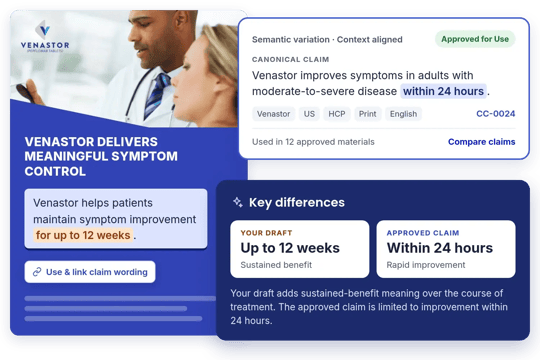
Claims Intelligence, part of Vodori’s AI-powered platform, compares every claim in your content to your approved and rejected claims by meaning, not just wording. MLR gets the analysis instead of the legwork.

Book a demo
claims-intelligence-rework-3000x2000

What is claims intelligence in life sciences?

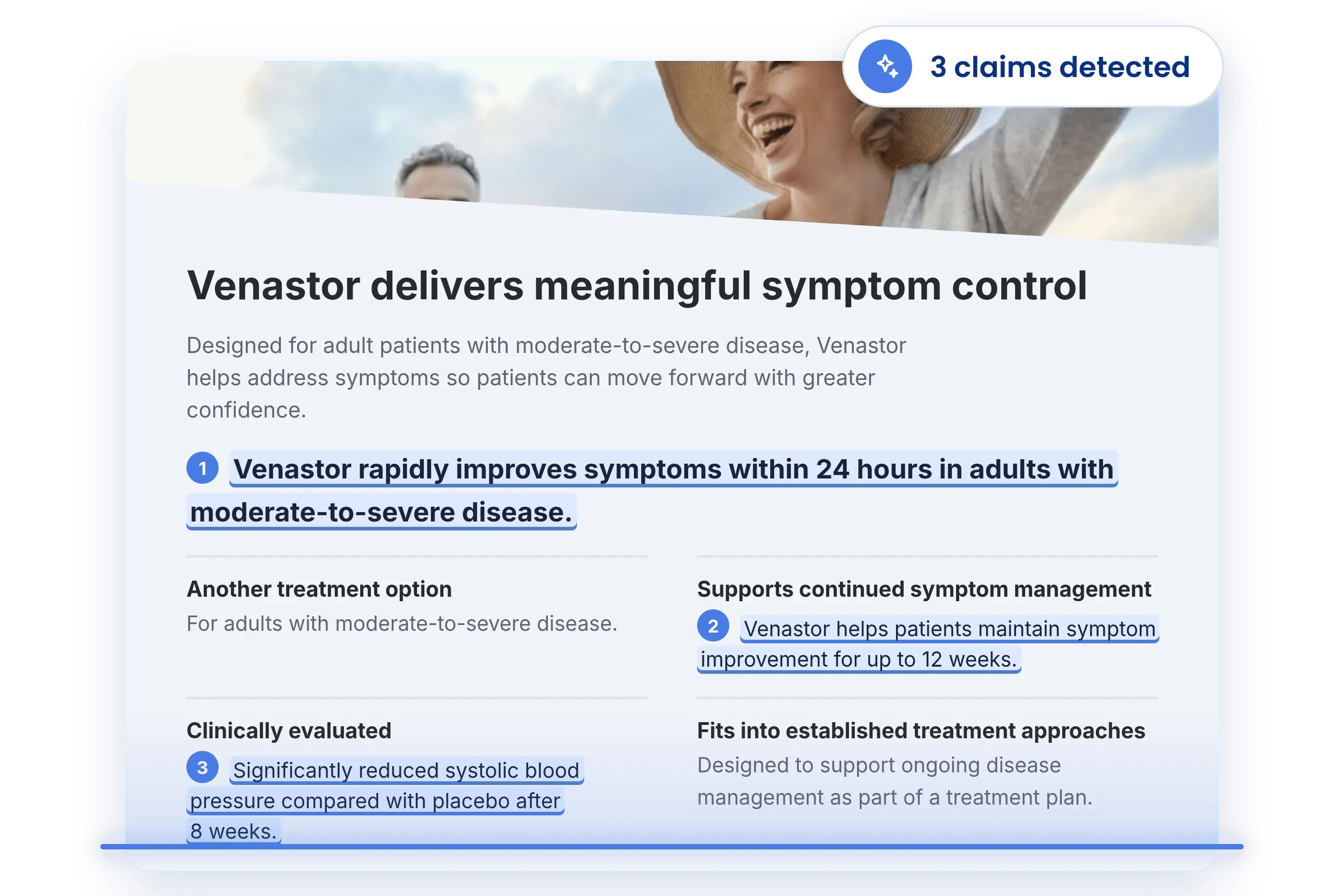
Claims Intelligence is an AI capability in Vodori's Regulated Content Intelligence Platform™ that compares the promotional claims in life sciences content against an organization's approved, adapted, and rejected claims by meaning, not just wording, before MLR review.

It identifies each claim in a piece of content, works out what that claim actually says, and shows whether it matches something your team has already approved. If it doesn't, you see what's missing and which approved alternatives are available.


Why do claims cause so much MLR rework?

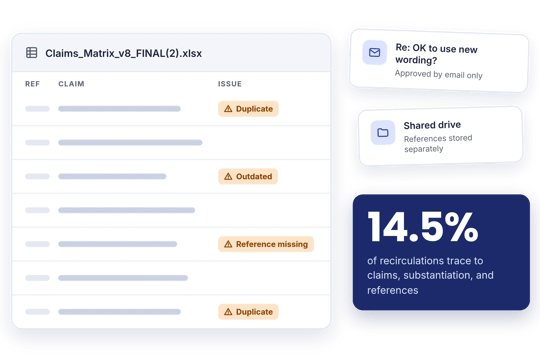
Claims, references, and substantiation are among the most painful parts of MLR review. According to Vodori's 2026 State of Promotional Review Benchmarks Report, substantiation and reference issues drive 8.4% of recirculations and claims issues drive another 6.1%. That's 14.5% of all rework tied to claims. The root problem is that claims knowledge is hard to build, hard to keep current, and hard to apply:

Most brands have a claims document, not a claims library

The claims matrix lives on a shared drive, separate from the references that support it.

Libraries go stale fast

When a label changes, teams update the content and skip the claims, so the library fills with duplicates.

Ad hoc approvals aren't traceable

A new claim variant gets approved inside one piece but never added to the library, so the next team has no record of the approval.

Marketing can't repeat the same sentence forever

Copy needs to stay fresh, but any wording that isn't an exact match to the claims matrix gets pushed back.

Every market multiplies the variants

The same statement is phrased and substantiated differently by country, channel, and audience.

How does AI claims substantiation work?

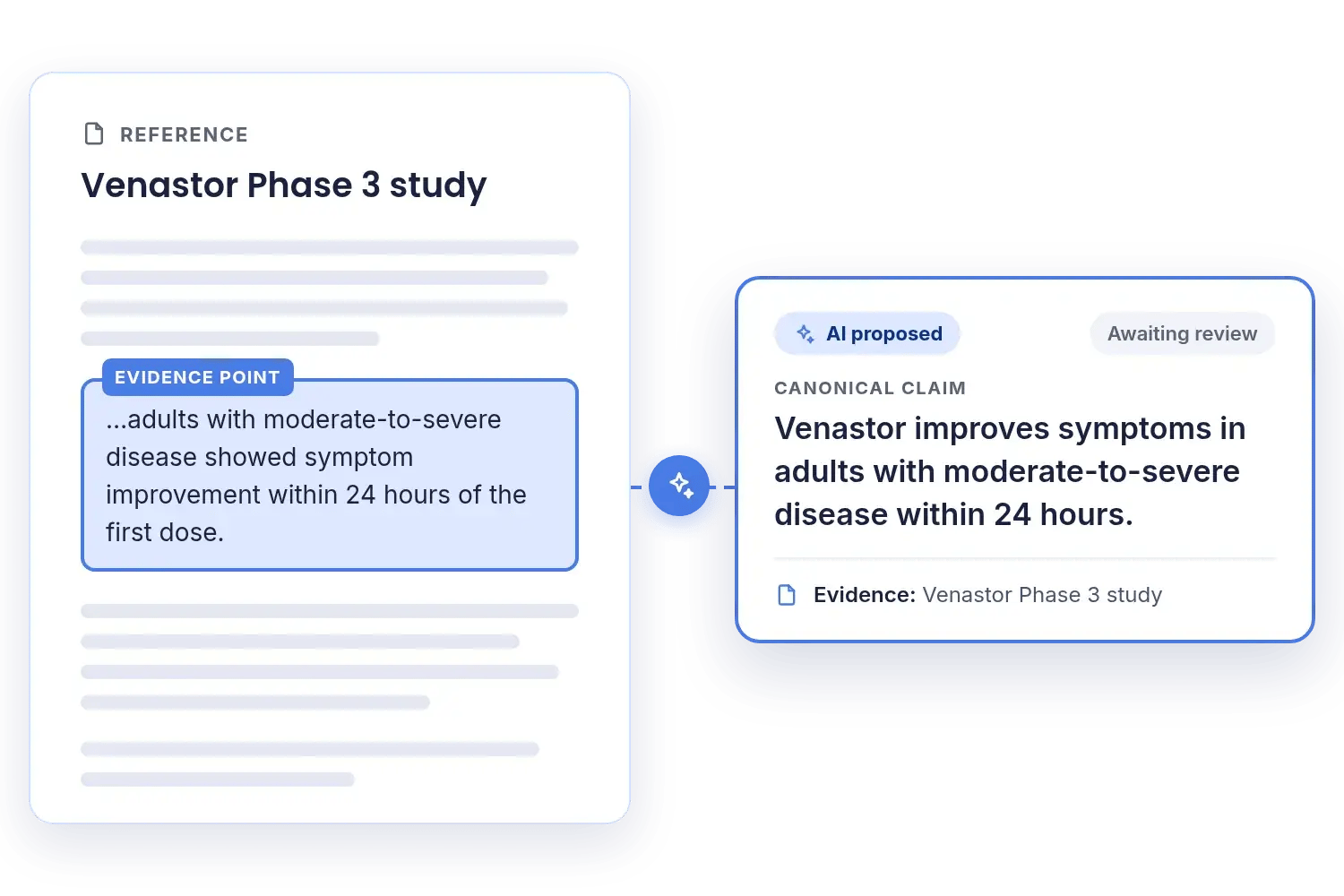
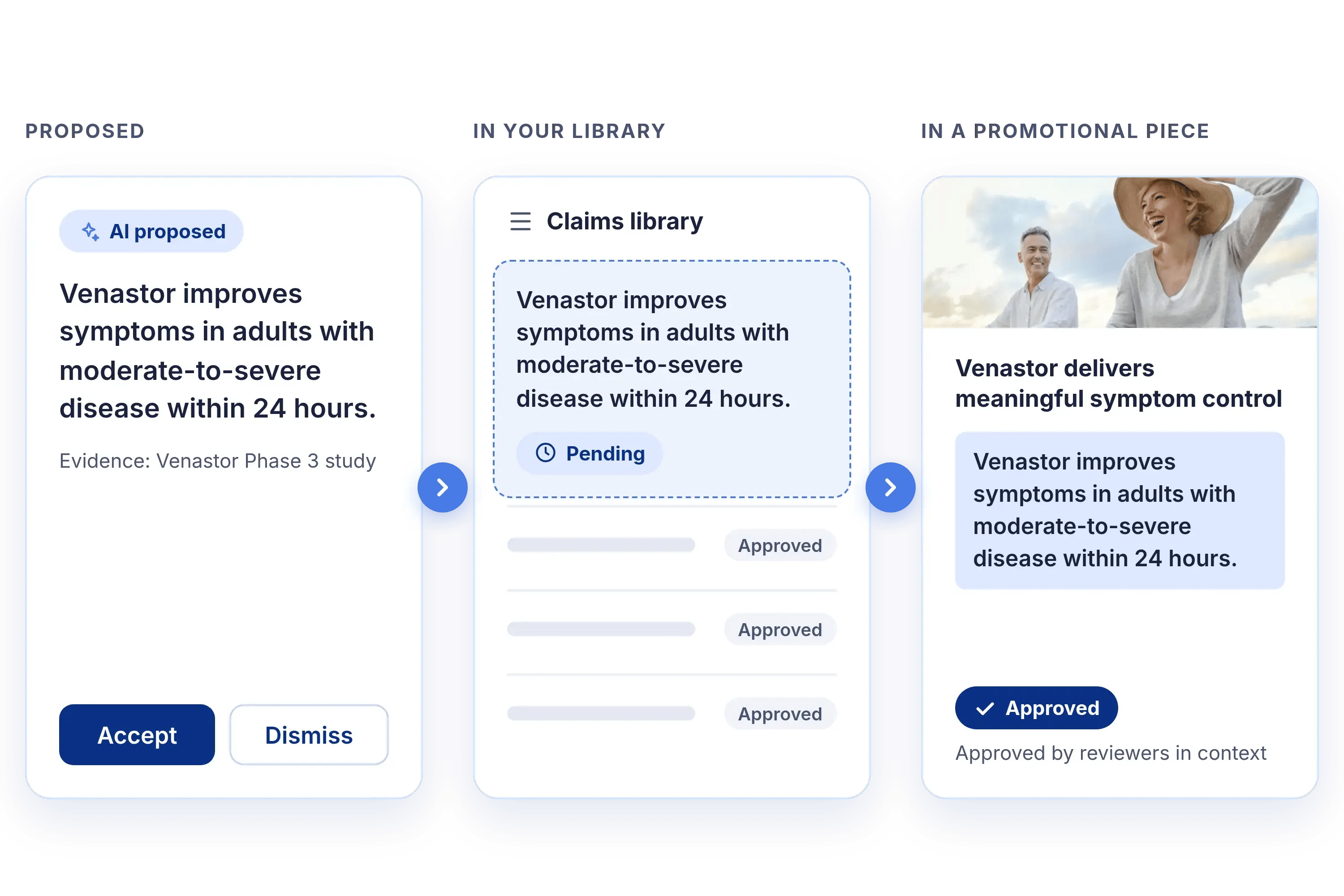
Claims Intelligence runs in the same pre-review workspace as Content Preflight, while your content is still in draft. Here's how the process works.

How do different departments benefit from Claims Intelligence?

Claims Intelligence resolves the tension between marketing's need for fresh copy and regulatory's need for proper substantiation.

icon-marketing-brand-agencies@2x
Marketing, brand, and agencies

Write in your own words and know before you submit whether each claim is approved, previously rejected, or net new. No more rejections for small wording changes.

icon-regulatory-legal@2x
Regulatory and legal reviewers

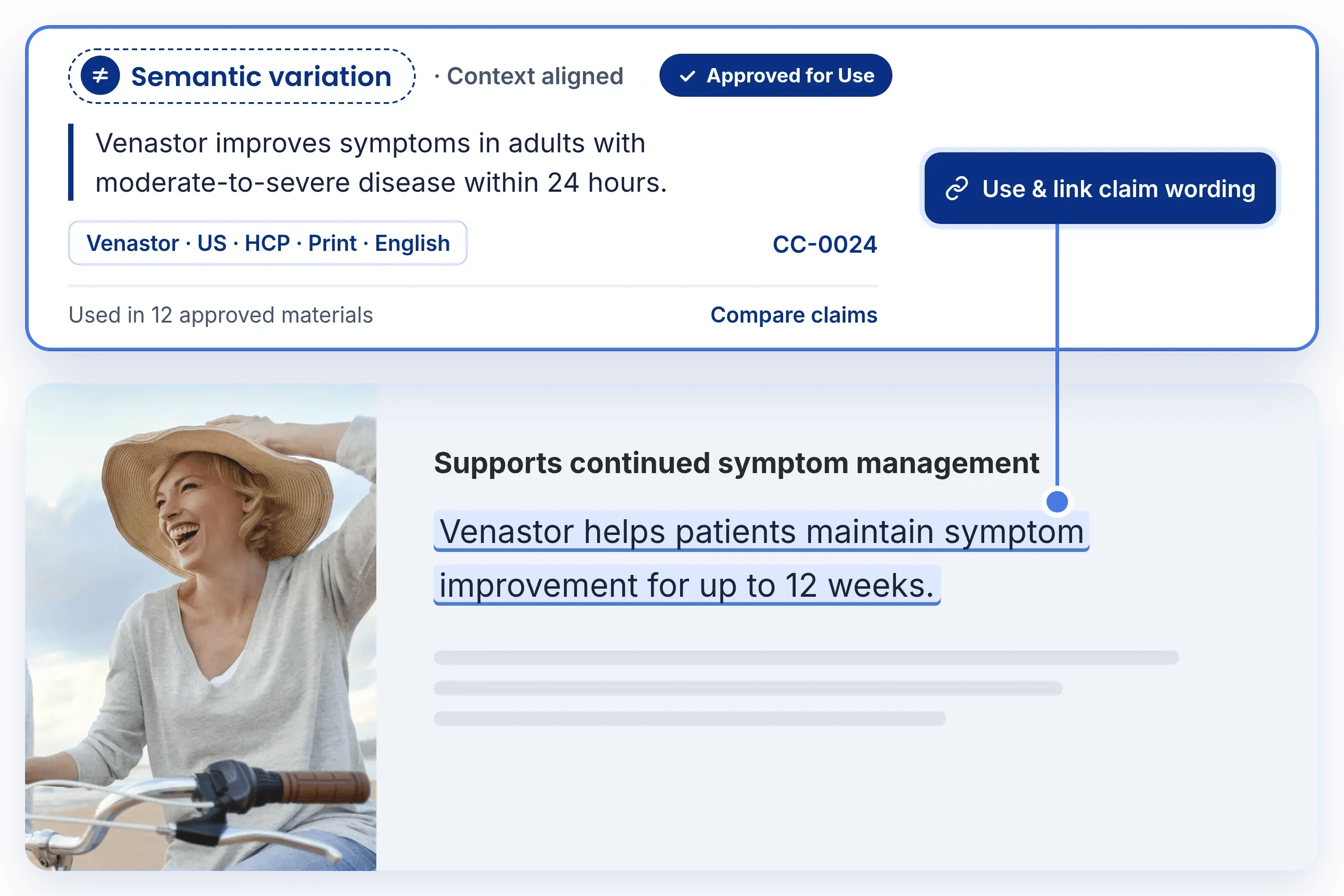
See every claim linked to its approved counterpart, with the reasoning and differences shown. AI provides the analysis, humans make the final judgement call.

icon-medical-affairs@2x
Medical affairs

Every claim traces back to the exact passages in the reference that support it, so claims don't drift from the evidence.

How does Claims Intelligence
keep humans in control?

Claims Intelligence does the comparison and surfaces the evidence.
Reviewers make the call.

AI recommends, people decide

Claims Intelligence does not approve, reject, or determine the compliance of content. It surfaces matches and recommendations with explanations, and your experts decide what to do with them.

Every decision is traceable

Links, dismissals, and claims decisions are recorded within Vodori's audit trail and permissions, so reviewers can see what was checked and why.

Your data stays yours

Customer data is never used to train AI models. Tenant isolation and zero-retention endpoints keep your content private.

Purpose-built for life sciences

Claims Intelligence works inside the platform where your claims are already approved, built on 20+ years of MLR expertise.

Ready to bring the claims analysis to MLR,
not the legwork?

Frequently asked questions

What is claims substantiation?

Claims substantiation is the evidence that supports a statement made in promotional or medical content, such as a clinical study, product label, or published reference. In life sciences, every clinical, safety, or efficacy claim must be substantiated before MLR approves the content. AI claims substantiation uses artificial intelligence to check whether each claim in a piece matches an approved, substantiated claim before review.

Is life sciences claims intelligence the same as insurance claims intelligence?

No. In insurance, claims intelligence means analytics for processing insurance claims. Vodori Claims Intelligence is built for life sciences: it checks the promotional and medical claims in regulated content against an organization's approved claims and evidence before MLR review.

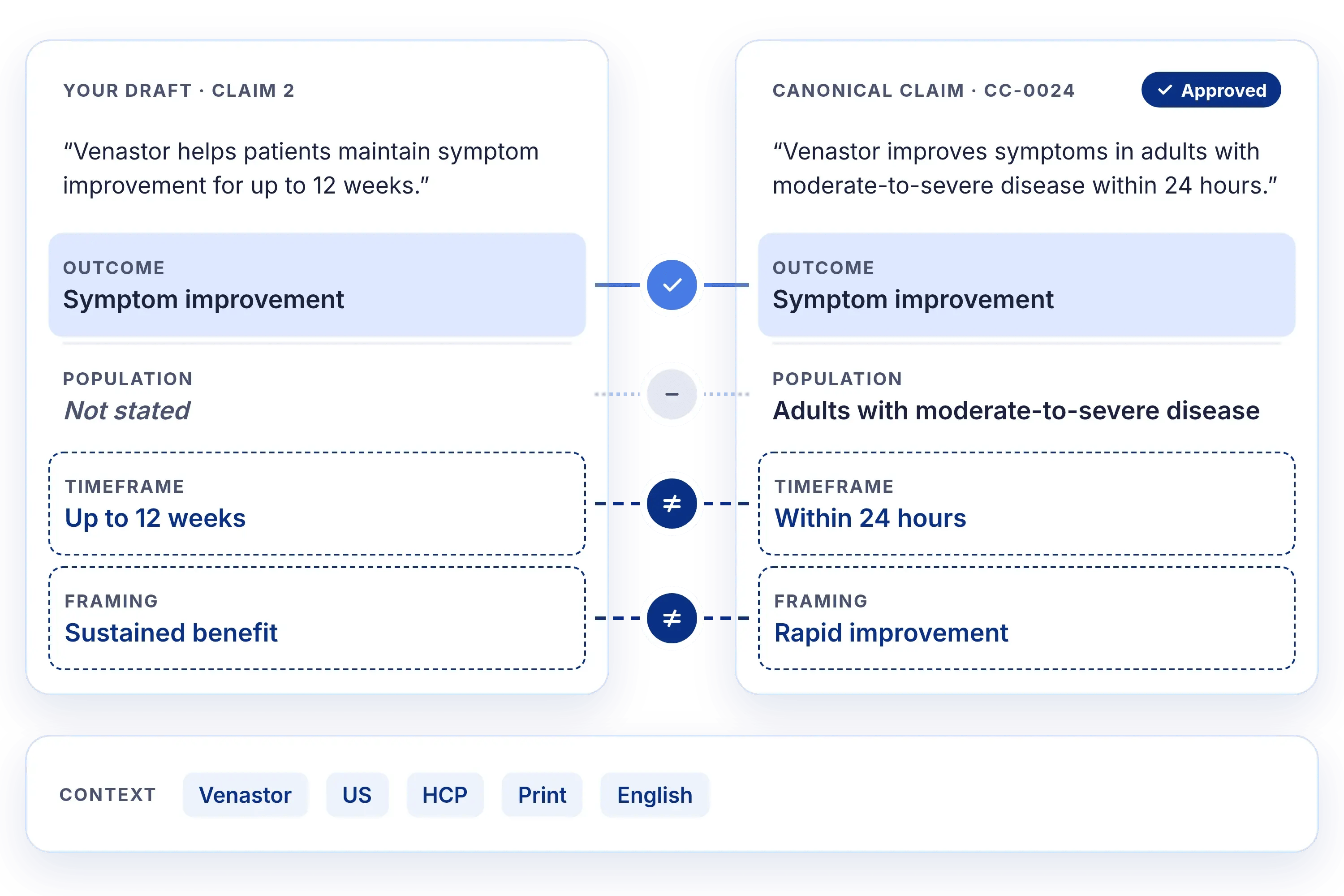
What's the difference between a semantic equivalent and a semantic variation?

A semantic equivalent uses different wording but means the same thing as an approved claim. A semantic variation is similar but changes the meaning in some way, for example a different timeframe, population, or amount. Claims Intelligence shows the key differences so reviewers can decide quickly.

Can we use our existing claims matrix?

Yes. Your existing claims library or claims matrix becomes the foundation. Approved claims seed Claims Intelligence, and past decisions become precedent the AI compares against.

Will Claims Intelligence automatically replace our wording with the approved claim?

No. When you choose approved wording, Claims Intelligence creates a redline annotation on the file. Your author or agency makes the change before the piece is submitted for review.

Does Claims Intelligence approve claims?

No. It surfaces matches, differences, and recommendations with explanations. It does not approve, reject, or determine the compliance of content. Medical, legal, and regulatory reviewers make every decision.

Can't we just do this with ChatGPT or Copilot?

A general-purpose AI can tell you whether two sentences sound alike. It can't tell you whether a phrase matches a claim your regulatory team approved last year, one they rejected, or why. Claims Intelligence compares against those governed decisions and their evidence, and records the result inside your review system.

Is our data used to train AI models?

No. Customer data is never used to train AI models.

How do we get access?

Claims Intelligence is currently available through Vodori's Early Access Program. Contact us to learn about joining or to see a demo.