


Quick answer: A core claims document (CCD), also called a claims compendium or brand book, is a centralized repository of pre-approved claims, along with their references and usage guidelines, that marketing teams reuse across promotional materials. A well-maintained CCD speeds up promotional review by giving writers and reviewers vetted claims to work from, which reduces rework and shortens approval times. This guide explains what a CCD is, the benefits it delivers, and how to create one in five steps.
How many times has your team worded and re-worded the same claims in all of your promotional materials? If it's a frequent occurrence, and if it's accompanied by problems finding the right references, it may be time to create a core claims document (CCD).
The concept of a CCD has existed for years in life sciences, but many teams still don't take full advantage of it. Used effectively, CCDs can dramatically reduce friction and delays during the promotional material review process.
Below, we explain what CCDs are, why they matter, and how to build one that supports faster, more consistent reviews.
What is a core claims document?
A core claims document, also called a claims compendium or brand book, is a centralized repository of pre-approved claims that can be used in your promotional materials. Each claim is accompanied by references, usage guidelines, and sometimes even variations for different content formats or regions.
When marketing teams or agency partners need to create new content, they can reference the CCD for claims that are already vetted, saving time and reducing rework during the promotional material review cycle.
Why use a core claims document?
There are three main benefits to keep in mind when deciding whether CCDs are right for your team:
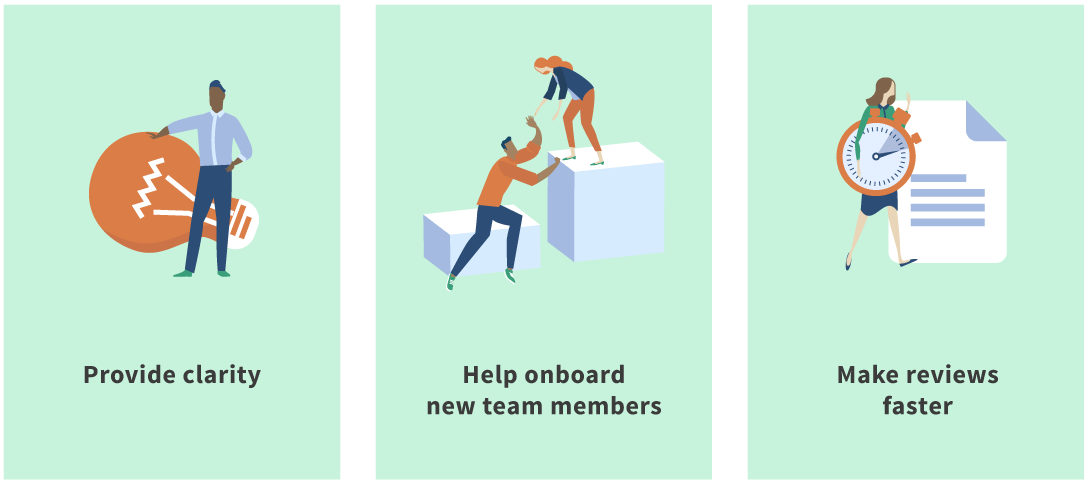
Clarity in messaging
If you don't currently use a CCD, your team or agency partners may be making the same mistakes across their promotional materials, leading to extra review time to resolve issues. Your team may also be resolving issues differently, which creates inconsistencies. A well-maintained CCD ensures every writer, reviewer, and partner is aligned on how claims should be worded and substantiated.
Easier onboarding
The centralized location of CCDs also makes knowledge transfer easier when your team changes. For example, if you're onboarding a new reviewer or agency partner, you can use a CCD as a resource to provide education around the claims you use, along with rules and reasoning for your decisions. That clarity reduces onboarding time and helps maintain alignment throughout the content lifecycle.
Faster review cycles
The biggest benefit is that CCDs can significantly reduce review time. When copywriters have a CCD to reference, they don't have to write new claims copy or dig for references for every promotional piece, which makes preparing for review faster. Also, by creating a CCD, your team members agree to the claims you can make ahead of time, which simplifies and speeds up approval times.
To see what that could mean for your team, use our ROI calculator to estimate the time and cost savings from a faster, more consistent review process.
Despite these benefits, CCDs need dedicated time to develop a first version and then to update it over time. Keep this in mind as we walk through the steps on how to create one.
How to create a core claims document
1. Set up a team
Start by identifying who should contribute to and approve the initial version of the CCD. This team often mirrors your typical promotional material review stakeholders: medical, legal, regulatory, and marketing. You'll also want to designate one owner to manage updates and serve as the point person for CCD maintenance.
2. Decide on a format
Most companies create one core claims document per product, though regional or audience-specific CCDs may also be appropriate. Decide whether to structure the CCD by claim category, product benefit, or intended audience. Be sure to include metadata like intended market, audience restrictions, and references.
3. Create your CCD
Gather all existing claims, references, and usage notes from prior promotional materials. If your product is new, start drafting claims from scratch and validate them through your usual MLR process. Be sure to include multiple versions of each claim (long-form, short-form, and headline variants) to support use across digital and print formats.
4. Review and approve your CCD
Route the CCD through your normal promotional review process. Once approved, make the document accessible to everyone involved in content creation or approval. Clearly communicate where the CCD lives, how to use it, and who to contact with questions.
5. Set a schedule for ongoing maintenance
A core claims document is only valuable if it stays current. Set a review cadence (e.g., quarterly or biannually) based on your product's lifecycle. Assign a team member to own updates and track when claims are added, edited, or removed. Always ensure that expired or invalid claims are removed or flagged.
And that's it, you've set your team up for success with your first CCD. Check out our other claims best practices to keep your momentum going.
How do you keep a core claims document up to date?
Building a CCD is the first step. Keeping it current is where most teams struggle. As claims are added, revised, or retired, a manually maintained document takes ongoing effort, and when a single claim changes, it can be difficult to track down every promotional material that used it.
This is where claims management software can help. With Vodori's claims management module, you can route, review, and approve individual claims with proper substantiation and link them directly to the materials that use them. A few capabilities that make maintenance easier:
- Link claims to content. Connect pre-approved claims to the promotional materials they appear in, so your team always knows what is available for use and where each claim is being used.
- Auto-substantiate. Automatically detect and link approved claims within content, reducing manual checks during review.
- Update with confidence. When a claim is revised or expires, quickly gather a list of every material where it is used, so updates are faster and nothing slips through.
- Approve variations. Maintain long-form, short-form, and headline versions of a claim to maximize usage across formats and channels.
- Share easily. Download the full claims library or a filtered view to share with internal teams and agency partners.
For teams that want to start with claims only, whether to meet EU MDR requirements, address a specific compliance need, or focus on claim approvals without adopting a full platform, claims management is also available as a standalone module. Creating and maintaining a core claims document takes effort upfront, but when integrated with a solution like Vodori, CCDs become a powerful part of a streamlined, scalable content operations strategy.
Frequently asked questions about core claims documents
What is the difference between a core claims document and a claims library?
A core claims document is a static set of pre-approved claims with their references and usage guidance, often organized by claim category, benefit, or audience. A claims library is a dynamic, searchable collection of individual approved claims your team can use to develop content. Sometimes, organizations use a core claims document to approve baseline messaging and then review, approve, and store them within a system (like Vodori) so there is a clear, traceable connection between each claim and the content in which they’re used.
How often should you update a core claims document?
Set a review cadence based on your product's lifecycle, such as quarterly or biannually. Assign an owner to track when claims are added, edited, or removed, and always remove or flag expired or invalid claims so the document stays current. If you’re using a digital claims management solution, expiration dates can be set systematically to remove the mental load of remembering which claims to re-review and when.
Who should own the core claims document?
Designate a single owner to manage updates and serve as the point person for maintenance. The contributing team usually mirrors your promotional review stakeholders: medical, legal, regulatory, and marketing.
What is the best way to manage claims and references across approved content?
The best way to manage claims and references across approved content is with a centralized claims management solution that connects directly to the promotional review process. Vodori's Claims Management module gives life sciences teams a governed source for approved claims, supporting references, approved language variations, and related promotional materials. This creates a connected, reliable claims library that helps teams produce compliant content faster and manage it more effectively throughout its lifecycle.
Can a core claims document speed up promotional review?
Yes. Because a CCD gives copywriters pre-approved claims and references to work from, they spend less time drafting new claims or hunting for sources, which makes content faster to prepare and review. And because stakeholders agree to approved claims ahead of time, approvals move more quickly. To elevate this even further, life science teams can choose to review, approve, and manage claims within their promotional review system so there's clear and strong connectivity between claims, references, and the associated promotional content.
Do you need software to maintain a core claims document?
No. You can maintain a CCD manually, but as the number of claims and materials grows, claims management software makes updates faster and helps keep outdated claims out of your content by linking each claim to the materials that use it.
Ready to streamline your claims?
Looking for more claims management best practices? You can find them here.